Should You Smile in Your Headshot? What the Research Actually Says (2026)
Smile or stay neutral? A practical guide to headshot expressions: smile intensity, warmth vs competence, cultural norms in 11 countries, and how to pick the right frame when AI generates 40 variations.
ON THIS PAGE
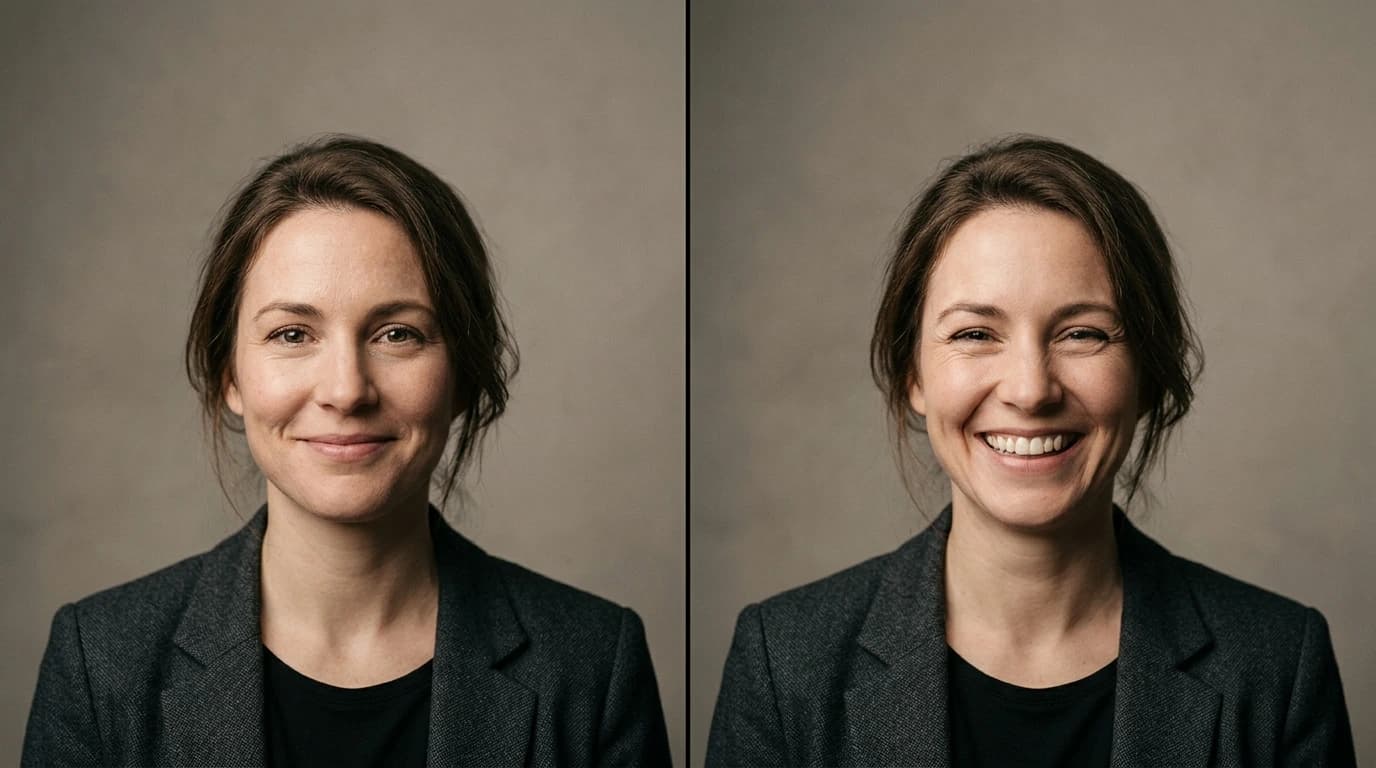
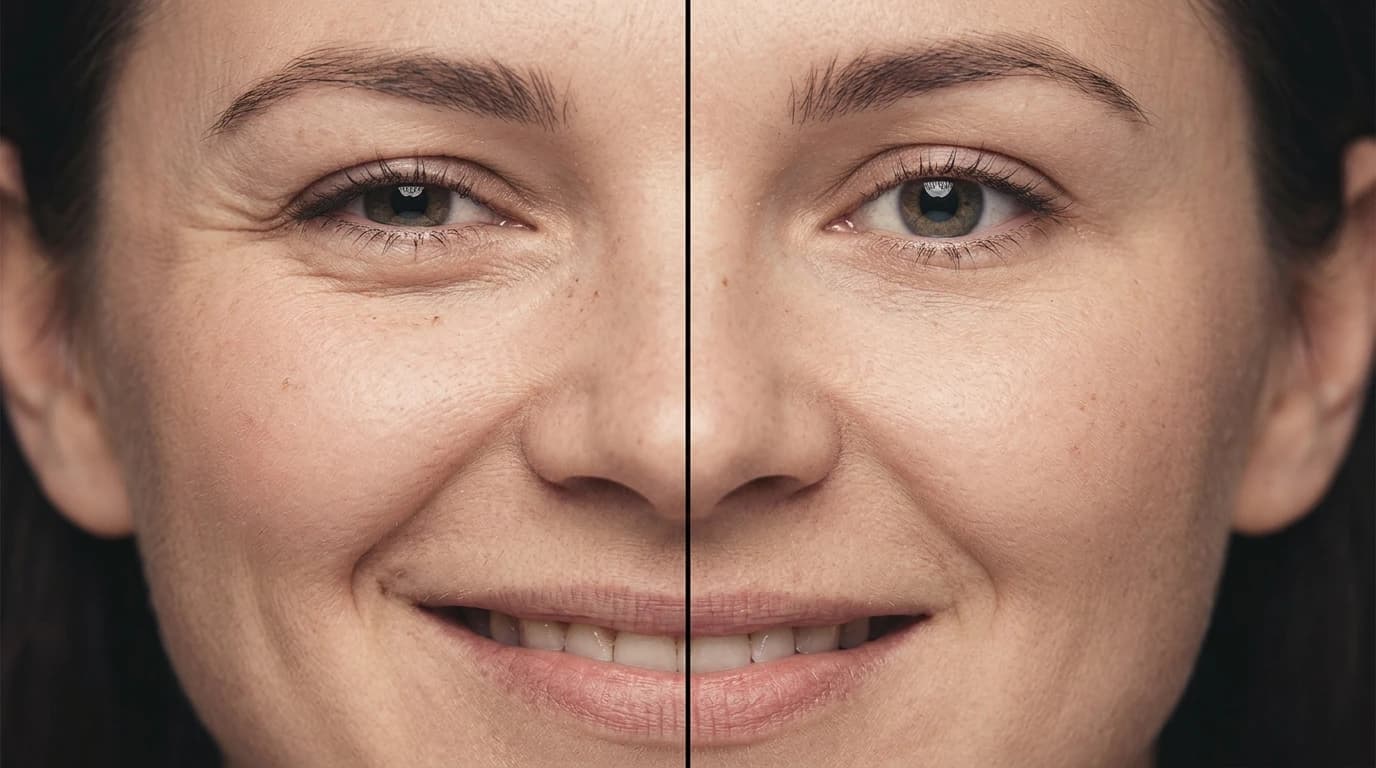
Two versions of the same person, same lighting, same jacket. In one, the mouth is closed and slightly turned up. In the other, the smile is wide enough to show teeth. Both are professional. Both would pass a recruiter's three-second scan. They also say different things, and one of them is probably wrong for your situation.
That is the problem with the question "should I smile in my headshot?" It sounds like a yes-or-no question. It is actually three questions stacked on top of each other: how much should you smile, for which context, and in which country. Most advice online answers only the first one, and answers it badly by assuming a single global default.
This guide separates those three layers. It looks at what published research says about smile intensity and perception, what it does not say, how expression norms differ across the markets Nothron serves, and how to make the choice when an AI tool hands you forty variations and no obvious winner.
It does not cover what to wear, which background color to pick, or how to pose. Those are separate decisions, and we link to the relevant guides as we go.
#Quick Answer: Smile or Not, by Situation
There is no single answer to whether you should smile in your headshot, but there is a defensible default for every situation.
| Context | Recommended expression | Why |
|---|---|---|
| LinkedIn, corporate, legal, finance | Slight closed-mouth smile or composed neutral | Keeps the competence signal while staying approachable |
| LinkedIn, sales, HR, education, healthcare | Warm, natural smile with some teeth | Warmth is the primary signal in these roles |
| CV photo, US / UK / Canada | Moderate smile with teeth is normal | Matches local hiring convention |
| CV photo, Germany / France / Switzerland | Measured closed-mouth smile or neutral | Local convention is more reserved |
| CV photo, Spain / Portugal / Turkey | Warm but controlled smile | Personal presentation matters, formality still expected |
| Company website and team pages | Consistent across the team, warmer than a CV | Inconsistency between colleagues reads as disorder |
| Dating apps | Candid, slightly asymmetric, mid-conversation | Authenticity beats polish |
| Creative portfolio | Composed neutral or a distant gaze | Leaves room for the viewer to interpret |
| Public speaking, press, author photo | Depends on the topic; warmth for service brands | The expression should match the message |
If you only remember one line: smile enough that the eyes change, not so much that the mouth becomes the subject.
#The Real Question Is Not "Smile or Not"
The internet treats this as a binary. The research does not. Two separate findings keep getting merged, and separating them changes the answer.
#Smile vs neutral: smiling usually does not hurt
When researchers compare a smiling face with a neutral one, the smiling face tends to win on most positive traits. Smiling people are rated as more kind, more honest, more sociable and more trustworthy across a wide range of studies going back decades. In one experiment on professional photographs of software developers, smiling models were rated as more competent than models with a neutral expression, not less.
That last result matters because it breaks a common assumption. Many people avoid smiling in professional photos because they believe a serious face signals authority. For a headshot, the evidence does not support that trade-off. A neutral face does not buy you competence; it mostly buys you ambiguity.
#Slight vs broad: this is where the trade-off appears
The interesting finding is not "smile or not." It is what happens as the smile gets wider.
Research on smile intensity has found a consistent pattern: a broad smile increases perceived warmth but lowers perceived competence compared with a slight smile. The effect has been demonstrated with marketers rating other marketers, and it holds in cross-cultural work. A 2021 study with Chinese faces asked participants to rate high-intensity and low-intensity happy expressions across eleven traits. Compared with the low-intensity smile, the high-intensity smile scored significantly higher on sociability and warmth, and significantly lower on intelligence, competence, dominance and aggressiveness. Trustworthiness, attractiveness, responsibility, confidence and tenacity showed no significant difference.
That is a precise and useful result. A wider smile does not make you look less honest. It makes you look warmer and less authoritative at the same time.
#What this means in practice
The choice is not between professional and friendly. It is a dial with two ends:
| Expression | Warmth | Competence | Best fit |
|---|---|---|---|
| Composed neutral | Low | High | Law, finance, executive, creative portfolio |
| Slight closed-mouth smile | Medium | High | Corporate LinkedIn, CV in reserved markets |
| Moderate open smile | High | Medium-high | Sales, HR, education, healthcare, US/UK CV |
| Broad toothy smile | Very high | Medium | Dating, personal brand, service businesses |
| Candid laugh | Very high | Low-medium | Social media, dating, lifestyle |
If your role depends on being trusted with decisions, stay left. If your role depends on being approached, move right. Most people should sit in the middle two columns and stop worrying about it.
What the research does not tell us: none of these studies tested AI-generated headshots directly. They measured perception of real photographs of real faces under controlled conditions. Applying them to a synthetic portrait is an inference, not a proven result. Treat the direction as reliable and the exact magnitude as unknown.
#What "genuine" actually means
The word "genuine" gets used as if it were a feeling. Mechanically, it describes a specific set of muscle movements.
A spontaneous smile involves the zygomatic major, which lifts the corners of the mouth, and the orbicularis oculi, which raises the cheeks and narrows the eye opening. That second part is what people mean by "the eyes smile." When only the mouth moves, observers reliably read the expression as posed, polite or false, even if they cannot say why.
This is the single most useful diagnostic for any headshot, real or generated. Cover the mouth with your hand and look at the eyes. If the eyes look neutral, the smile is not working. If the cheeks are lifted and there is a slight crease at the outer corner, it is.
#The Five Headshot Smiles and Where Each One Works
Most advice treats "smiling" as one thing. It is at least five, and they are not interchangeable.
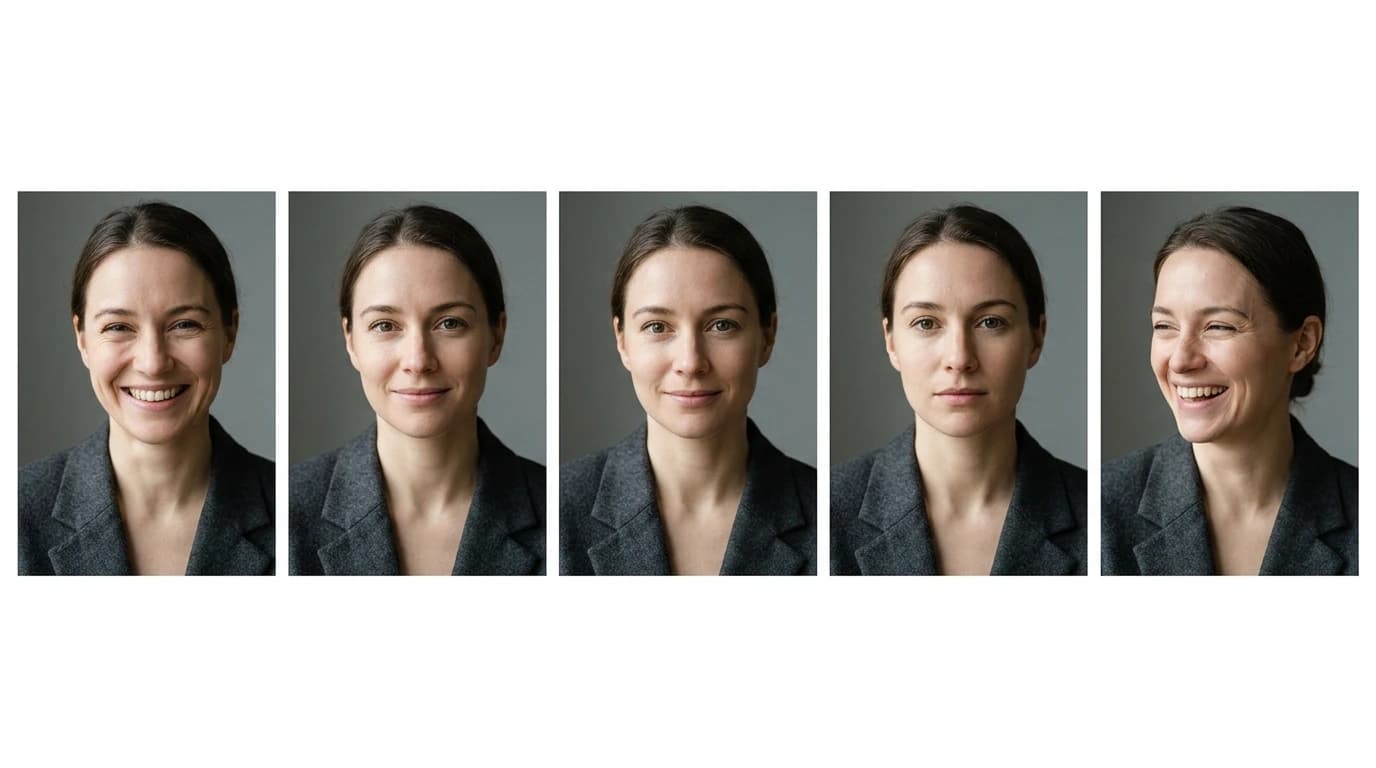
#1. Broad, toothy smile
What it is: A wide smile with visible upper teeth, lifted cheeks and narrowed eyes. The mouth is the dominant feature.
Works for: Sales, client-facing consulting, real estate, education, healthcare, customer success, dating profiles, US and UK CVs, personal brands built on approachability.
Risk: At small sizes it can read as a row of teeth rather than a face. In conservative industries it can look over-eager. If the eyes are not engaged, it becomes the classic stock-photo grin.
#2. Slight closed-mouth smile
What it is: Lips together, corners turned up, cheeks slightly lifted, eyes relaxed but alert.
Works for: The broadest range of professional contexts. Corporate LinkedIn, law, finance, engineering, academia, German and French CV photos, executive portraits. This is the safest default if you are unsure.
Risk: On a very small thumbnail it can flatten into a neutral expression. If the lighting is flat, it can look like a passport photo.
#3. Micro-smile, or the "listening" expression
What it is: Barely a smile. The mouth is neutral to slightly turned up, and the interest is carried by the eyes and a very slight head tilt.
Works for: Consulting, therapy and coaching, teaching, B2B thought leadership, author photos, portraits where you want to look engaged rather than cheerful.
Risk: It is the hardest expression to read at thumbnail size and the easiest for a generative model to turn into a blank stare. It needs good lighting around the eyes to survive.
#4. Composed neutral
What it is: Relaxed face, direct gaze, no smile, no tension in the jaw or brow.
Works for: Law, finance, executive and board-level portraits, creative portfolios, editorial and press images, technical and academic profiles, CVs in markets with reserved photo conventions.
Risk: Neutral is not the same as blank. A neutral face with tension in the mouth or a fixed stare reads as cold or hostile. It also loses the competence advantage that smiling appears to carry, so it only makes sense when authority is the point.
#5. Candid laugh
What it is: A caught-mid-moment expression, usually asymmetric, often with the head turned slightly away from the camera.
Works for: Dating profiles, social media, lifestyle brands, speaker pages, founder stories.
Risk: Almost never appropriate for a formal CV or a conservative corporate profile. It is also the expression AI models fake most convincingly and most badly at the same time, because asymmetry is harder to generate than symmetry.
#Matching the Expression to the Context
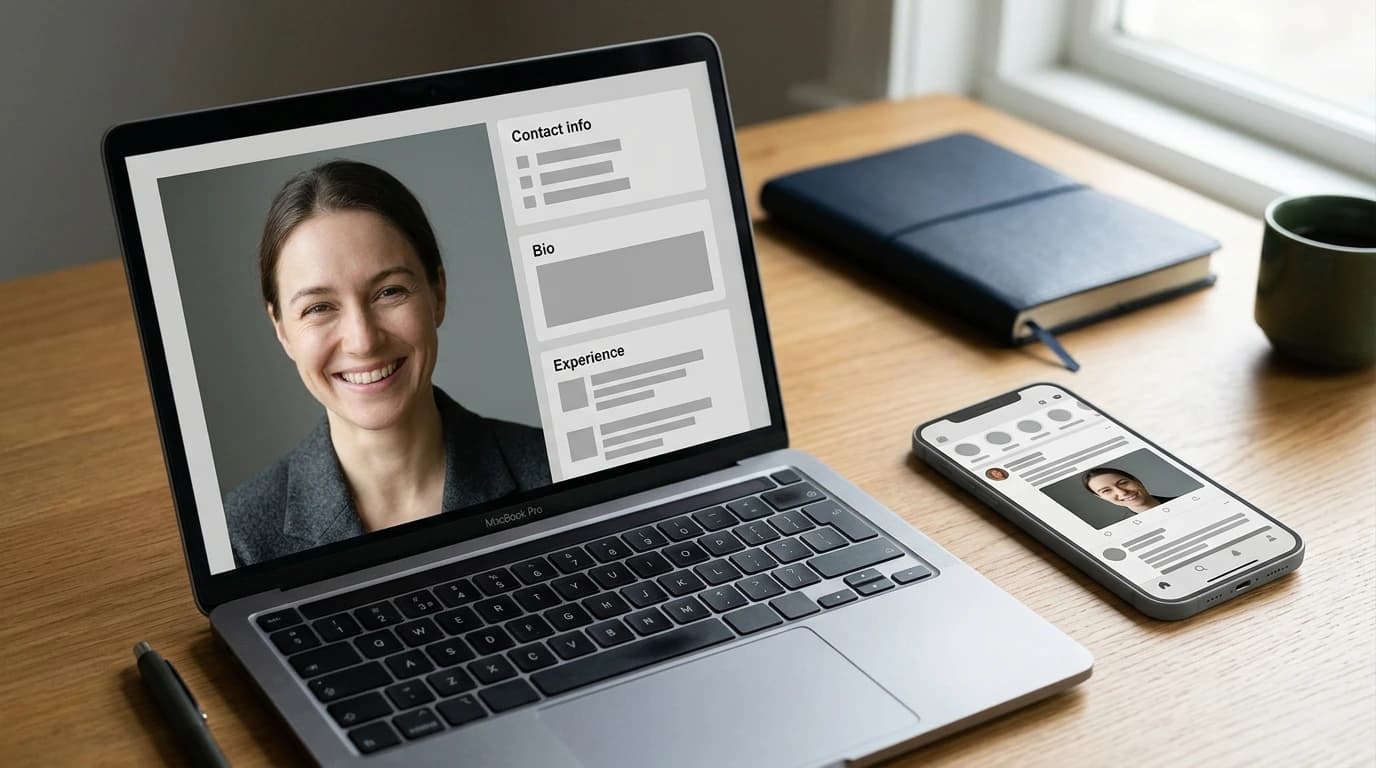
A LinkedIn photo is displayed as a small circle, often 40 to 60 pixels wide in a comment thread. At that size, subtlety disappears. The eyes and the mouth have to do all the work.
Two practical rules follow. First, the expression must still be readable when the image is tiny, which favors a clear slight-to-moderate smile over a micro-smile or a very subtle neutral. Second, the face should fill enough of the frame that the expression survives the crop. A perfectly nice expression on a full-body shot is invisible in the circle.
For most professional roles, a relaxed smile with direct eye contact is the right answer. If you work in a field where authority is the product, a composed neutral with warm eyes is defensible. For more on the platform's own guidance and the authenticity question, see our guide to AI headshot authenticity on LinkedIn.
#CV and application photos
The CV photo is where country norms matter most, and where a single global rule fails hardest. A photo that looks warm and appropriate in Madrid can look casual in Frankfurt. Our resume photo guide covers the legal and cultural rules market by market; the expression guidance is simpler:
- United States, United Kingdom, Canada: a moderate smile with teeth is normal and expected.
- Germany, France, Switzerland, Austria: a measured closed-mouth smile or a composed neutral is the safer register.
- Spain, Portugal, Turkey, Italy: warmth is welcome, but the photo is still a formal document. A controlled smile beats a broad grin.
- Everywhere: avoid the expression you would use in a group photo. A CV photo is a portrait, not a snapshot.
#Company websites and team pages
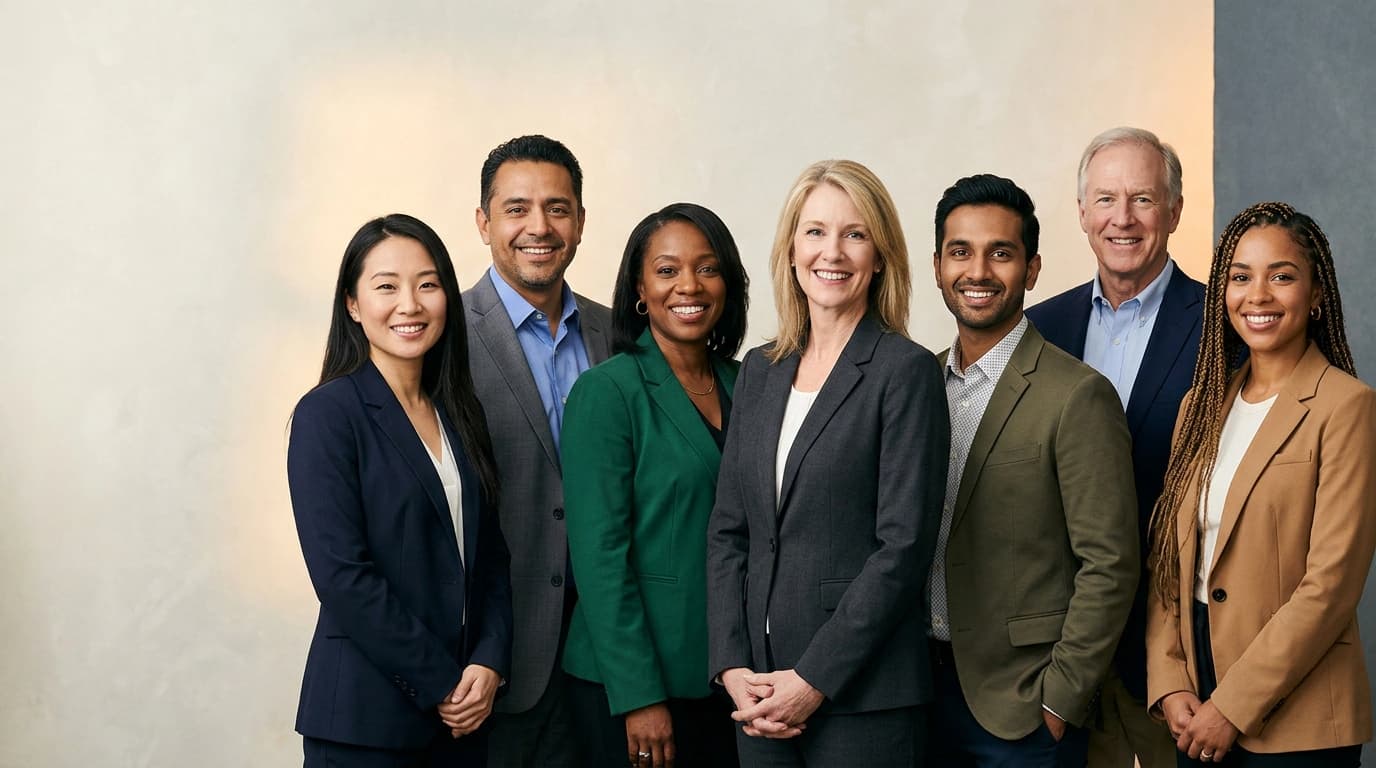
Expression consistency matters more than the expression itself. If one person on the team page is laughing and the next looks like a border-control officer, the page reads as disorganised, and visitors notice the mismatch before they notice the individuals.
Pick a register for the whole team. Most organizations land on a moderate smile: warm enough for a services business, controlled enough for a corporate site. Then apply it across the set, and make sure the lighting and background are consistent too. Our headshot guide by profession covers the wardrobe and background side of that consistency.
#Sales, consulting and client-facing roles
Here warmth is not decoration. It is part of the job. Clients are deciding whether they want to spend an hour on a call with you, and a face that looks approachable lowers that barrier.
The failure mode is not smiling too much; it is smiling in a way that looks transactional. A photograph that says "I am delighted to meet you" before you have met anyone reads as a sales technique. Aim for the expression you would have two minutes into a good conversation, not the one you use when someone points a camera at you.
#Dating apps
Dating profiles are judged on authenticity more than authority, which flips the logic. A slightly imperfect, asymmetric, mid-conversation expression outperforms a polished studio smile, because the second one reads as performed.
The same eye test applies. Teeth without eye engagement is the most common reason a dating photo feels off, and the most common reason an AI-generated dating photo gets flagged as fake. Our dating profile photo tips cover the wider set.
#Creative and portfolio work
In creative fields, a composed neutral often works better than a smile, because it leaves room for the viewer to project. An actor's headshot is a special case: it should look like you on an ordinary day, which usually means a natural, unforced expression rather than a performance.
#Does the "American Smile" Travel?
This is where most headshot advice quietly breaks. The default assumption in English-language content is that a broad smile is universally professional. It is not.
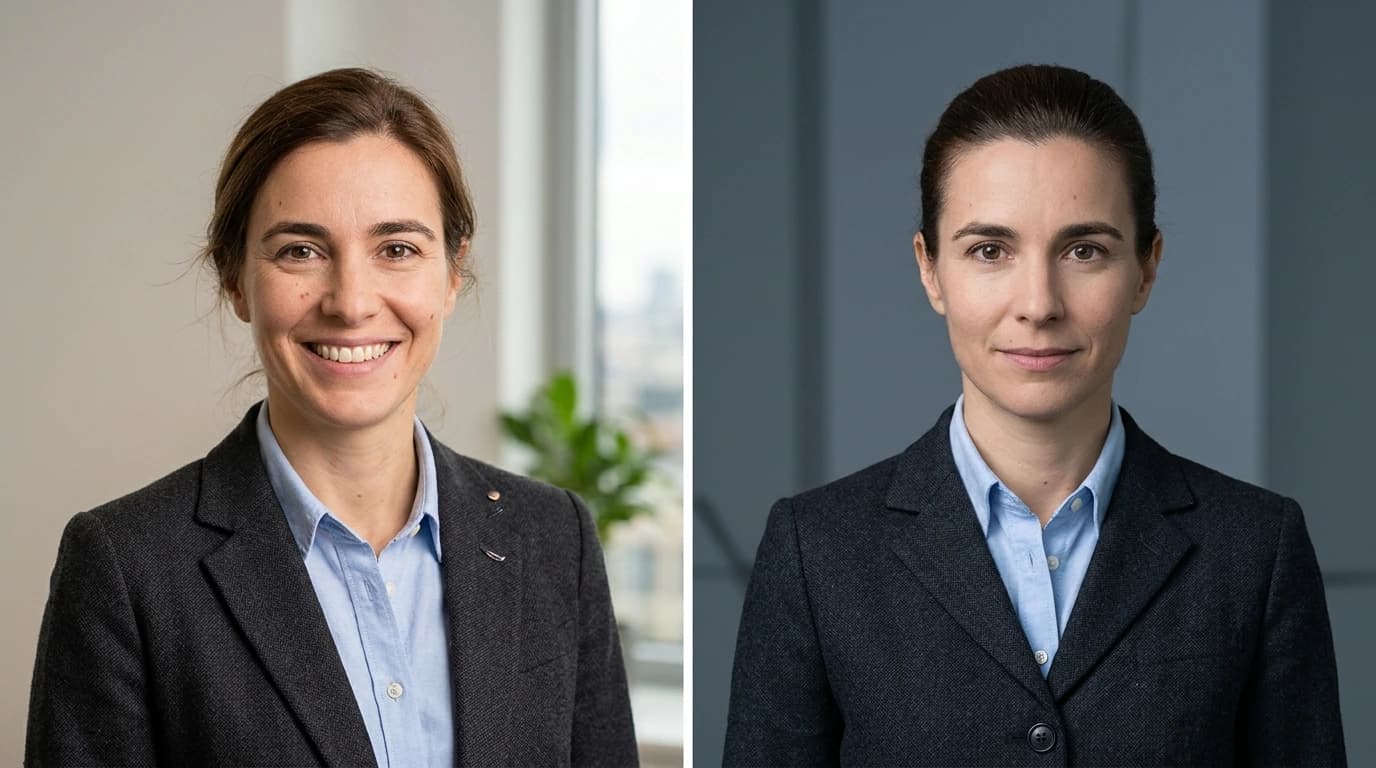
#What the cross-cultural data shows
The most cited dataset on this comes from a 2010 study published in the Journal of Nonverbal Behavior. The researcher analyzed 2,000 self-selected profile photographs from users of a messaging platform in ten countries, split evenly by gender, all aged 18 to 39, collected between 2006 and 2007. Two independent judges, blind to the country of origin, coded each photo for the presence of a smile.
| Country | Photos showing a smile |
|---|---|
| United Kingdom | 73.5% |
| Spain | 64.5% |
| Italy | 61.5% |
| Slovenia | 54.0% |
| Czech Republic | 53.0% |
| West Germany | 47.0% |
| France | 46.5% |
| East Germany | 46.0% |
| Hungary | 45.0% |
| Finland | 43.0% |
| Poland | 39.5% |
The gap between the highest and lowest country is more than thirty percentage points. Women smiled more often than men in every country sampled, at 61.5 percent versus 41.9 percent overall. The study also found that people in the former Eastern bloc smiled less than those in Western Europe, 47.5 percent versus 56 percent.
#What this data can and cannot tell you
Before you redesign your CV around it, four limitations matter:
- These are not headshots. They are self-chosen chat profile pictures, which is a different genre with different norms.
- The data is old. It was collected in 2006 and 2007 and published in 2010. Photo conventions have shifted, especially after the pandemic normalised video calls and personal branding.
- It measures presence, not intensity. The coding was smile or no smile. A closed-lip smile and a full grin count the same.
- The sample is not representative. It is internet users in a specific age band in countries with moderate internet penetration at the time.
So the honest reading is directional. It suggests that a broad, toothy smile is a stronger default in the UK and Spain than in Germany, France, Finland or Poland, and that a more reserved expression will feel more native in the latter markets. It does not prove that a smile will hurt you in Berlin.
#The safe rule for international applications
If you are applying across borders, or you do not know the local norm:
- Use a slight closed-mouth smile. It is legible as friendly in high-smile cultures and legible as composed in low-smile cultures. It is the only expression that travels without translation.
- Avoid the extremes. A broad grin and a stony neutral are both strong signals, and strong signals are the ones that misfire.
- When a market's convention is unclear, match the company rather than the country. A Berlin startup and a Munich law firm do not share a photo culture, and the job ad usually tells you which one you are dealing with.
#Industry Nuance in One Table
The full breakdown lives in our professional headshot guide by profession. This is the short version, focused only on expression:
| Field | Default expression | Note |
|---|---|---|
| Law, finance, banking | Slight closed-mouth or composed neutral | Authority is the product |
| Corporate executive, board | Slight smile, direct gaze | Warmth without informality |
| Medicine, healthcare | Warm moderate smile | Trust and approachability |
| Real estate | Broad, warm smile | The face is the brand |
| Sales and business development | Moderate to broad smile | Approachability drives replies |
| Teaching, academia | Warm but restrained | Credibility plus accessibility |
| Tech, engineering | Slight smile or neutral | Neutral is common and accepted |
| Creative, design, arts | Composed neutral or distant gaze | Leaves interpretive space |
| Acting and casting | Natural, current, unforced | Must match how you look today |
| Freelance and consulting | Moderate smile | Client trust plus competence |
#Choosing an Expression When AI Generates the Photo
Everything above assumes you are standing in front of a camera and can adjust. When a model generates the image, the decision moves. You are no longer choosing how to look; you are choosing which frame to keep.
#Why you get so many variations
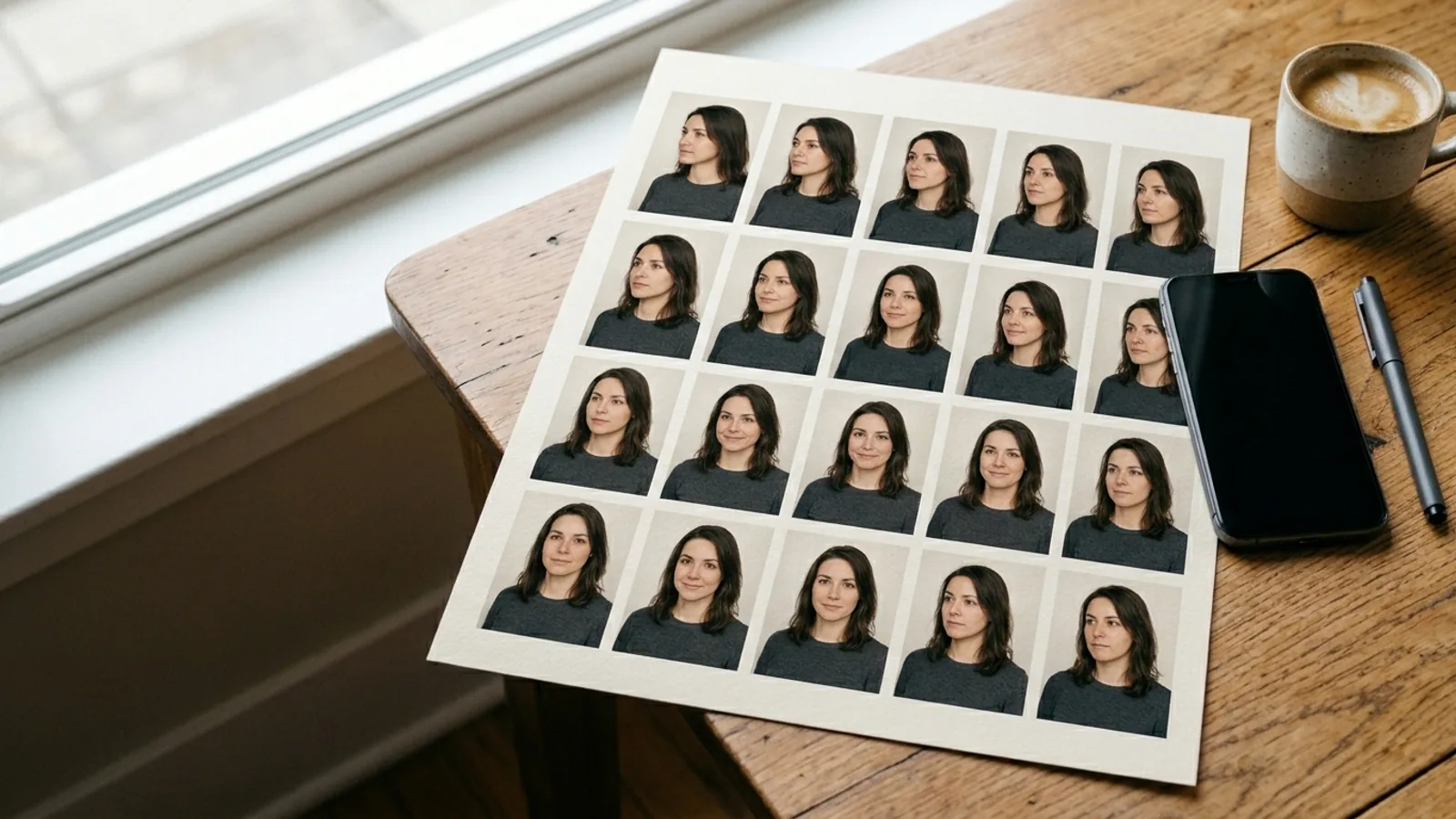
A generative headshot pipeline does not produce one photograph. It produces a range, because the model varies scene, light, wardrobe, framing and expression independently. Nothron's look system works this way: each of its styles is a defined card with a scene, a lighting setup, a wardrobe set and a set of expression options, so a single session returns the same person across different registers rather than forty copies of one smile.
That is useful, but only if you treat the output as a set to be judged rather than a lottery to be won.
#Generate a range, then judge
The most common mistake is to generate one batch, scroll until something feels acceptable, and stop. The second most common is to compare frames where three variables changed at once, which makes the comparison meaningless.
A better process:
- Pick two or three styles that fit your context, not ten.
- Hold everything else constant. Compare expressions within the same style, same lighting, same wardrobe. If the outfit changed, you are no longer judging the expression.
- Narrow by crop first. Shrink each candidate to a 100-pixel circle. The expressions that survive are the ones that will work on LinkedIn.
- Then judge at full size. Check the eyes, the skin texture and the likeness. A frame that wins at thumbnail size and fails at full size is a thumbnail, not a headshot.
#The two failure modes
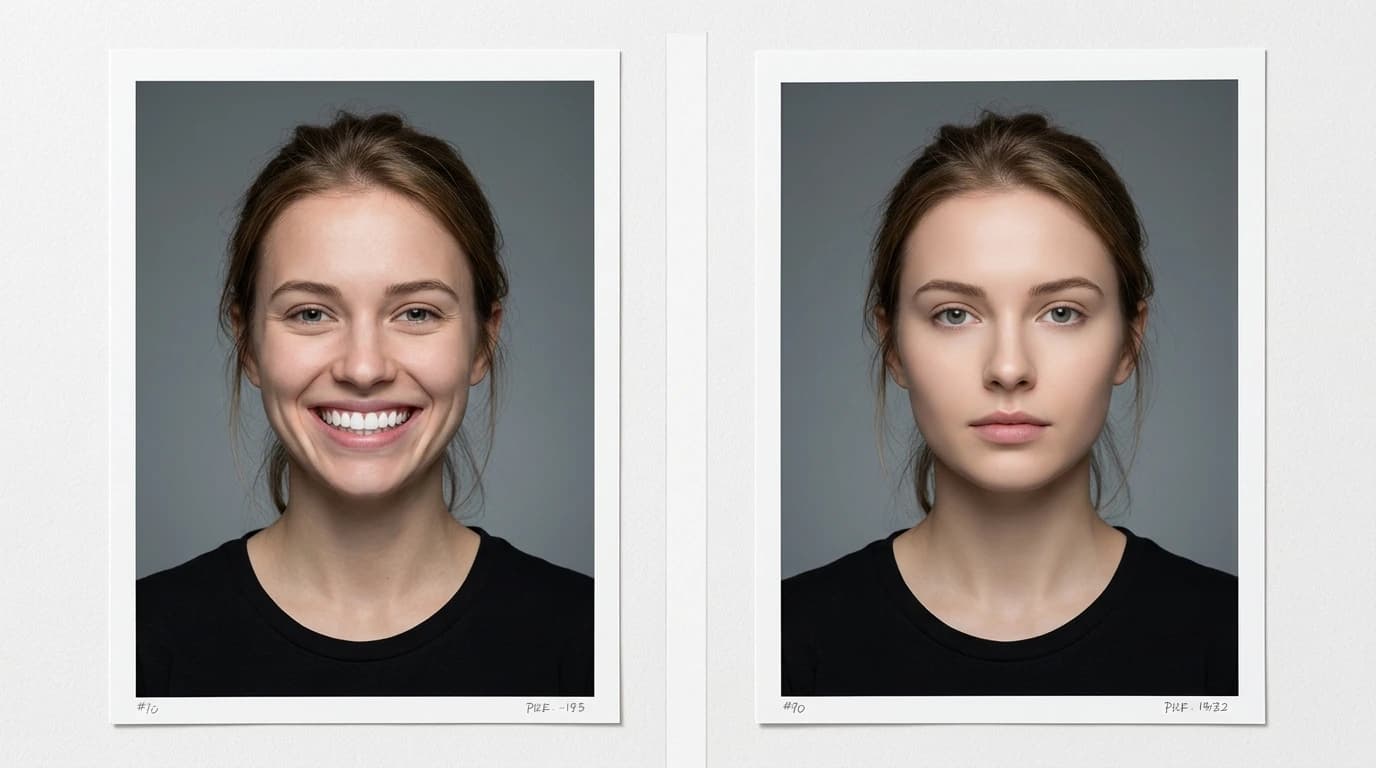
The rictus grin. The mouth is wide, the teeth are perfectly even, and the upper face is motionless. There is no cheek lift, no crease at the eye corner, no change in the eyelid. This is the signature of a model that has learned "smile" as a mouth shape. It reads as a stock photo, a mask, or an advertisement, and it is the single most common reason an AI headshot gets identified as synthetic.
The dead-eyed neutral. The face is symmetrical, smooth and completely still. No micro-expression, no asymmetry, no sign that a person is behind it. This one is subtler and often passes casual inspection, but it reads as a passport photo or an avatar, which undercuts the point of a headshot.
Both failures come from the same place: the model optimising for a clean shape rather than a lived expression. When you are selecting frames, look for asymmetry, small imperfections around the eyes, and a slight difference between the two sides of the mouth. Those are the signals of a real face.
#A short workflow
- Choose your mode and two or three styles that match the context table above.
- Generate across those styles so you get an expression range, not a single look.
- Filter to the frames where the eyes are doing work.
- Test the survivors in a small circle.
- Check likeness at full size before you commit.
- Export at the resolution your platform needs, then crop separately for LinkedIn, your CV and your site.
If every frame fails the eye test, the problem is upstream. It is usually the input photos, not the generation settings. Our 10 to 15 photo checklist covers what the model needs to see, including why you should include both neutral and smiling inputs so it has a range to learn from.
#The 60-Second Pre-Publish Test
Before you replace a profile photo, run these seven checks. They take under a minute and catch almost every bad expression.
- Cover the mouth. Do the eyes still look happy, engaged or warm? If they look neutral, the smile is decorative.
- Shrink it. View the image at 100 pixels wide. Can you still tell what the expression is? If not, it will not work on LinkedIn.
- Look at the teeth. Are they natural, or is this a "say cheese" row of identical rectangles?
- Check the jaw and neck. Tension there makes a smile look like a wince, and it is the hardest thing to notice in your own photo.
- Ask whether it looks like you. Not a better you, not a younger you. You, on a good day, in this decade.
- Match it to the destination. The same face should not be used for a dating app, a law firm bio and a passport application.
- Check the local norm. If you are applying in a market you did not grow up in, look at five photos of people doing your job there before you commit.
#Six Mistakes That Undo a Good Expression
- Using one photo everywhere. A broad smile that works on a dating app can undercut a finance profile. Generate once, crop and choose per context.
- Assuming professional means serious. The evidence points the other way for headshots: smiling faces are rated at least as competent, and often more so.
- Confusing teeth with warmth. Teeth are a shape. Warmth comes from the eyes, the cheeks and the slight asymmetry of a real expression.
- Ignoring the crop. A great expression in a full-body frame is invisible in a circle.
- Applying one country's norm globally. A US-default grin is not a neutral choice in Frankfurt or Warsaw.
- Reviewing forty variations one by one. Decision fatigue produces worse choices than a structured filter. Crop first, then compare.
#Frequently Asked Questions
#Should I smile in my LinkedIn headshot?
For most roles, yes, but a slight or moderate smile is usually safer than a broad toothy grin. A smile reads as approachable and, in several studies, no less competent than a neutral face. Broad smiles tend to raise perceived warmth while slightly lowering perceived competence, so the safest default for corporate, legal and finance profiles is a relaxed closed-mouth or small open smile with direct eye contact.
#Is it unprofessional to smile with teeth?
No. A natural toothy smile is normal in the United States, the United Kingdom, Spain and much of Latin America, and it is the default on many corporate websites. It becomes a liability when it looks forced, when the eyes do not join in, or when the local hiring culture is more reserved. The problem is rarely the teeth themselves; it is the mismatch between the expression and the context.
#Should I smile in a German or French CV photo?
A measured, closed-mouth smile or a composed neutral expression is the safer starting point. A 2010 study of 2,000 self-selected profile photos from ten European countries found smiling in 47 percent of West German photos and 46.5 percent of French photos, compared with 73.5 percent in the United Kingdom. Treat this as a direction, not a rule: the photos were not headshots, the data is from 2006 to 2007, and individual employers vary.
#Should my CV photo use the same expression as my LinkedIn photo?
They can come from the same session, but they should not always be the identical frame. LinkedIn photos are viewed as small circles in a feed, where the eyes and mouth need to read instantly. A CV photo is often viewed larger and in a more formal context. Generate both from one session, then crop and choose separately.
#Why does my AI headshot smile look fake?
The most common reason is that the mouth is smiling but the eyes are not. A genuine smile involves the muscles around the eyes, raised cheeks and a slight narrowing of the lower eyelid. Generative models sometimes produce a wide mouth with a static upper face, which reads as a stock photo or a mask. Oversized, perfectly symmetrical teeth and a lack of skin folds around the eyes are the usual giveaways.
#Can I ask an AI headshot generator for a neutral expression instead of a smile?
It depends on the tool. Some generators produce a fixed expression range per style. Nothron varies expression across its look cards, so a single style can return a mix of neutral, micro-smile and fuller smiles. The practical approach is to generate across two or three styles, keep the variable you are testing constant, and choose the expression afterwards rather than trying to control it in advance.
#Should I smile in a dating app photo?
A genuine, slightly asymmetric smile usually performs better than a posed one, because dating profiles are judged on authenticity more than authority. A candid laugh or a mid-conversation expression often reads better than a studio grin. What hurts is the same thing that hurts professional photos: teeth without eye engagement.
#Is a slight smile better than a big smile for a lawyer or banker?
Usually yes. Research on smile intensity suggests that broad smiles increase perceived warmth but can reduce perceived competence, while slight smiles preserve more of the competence signal. In law, finance and executive portraits, a slight closed-mouth smile or a composed neutral with direct eye contact is the conventional choice. Client-facing roles in those same firms can justify a warmer expression.
#How many expression variations should I generate before choosing?
Three to five usable frames per context is enough. More than that creates decision fatigue without improving the outcome. Generate a range across two or three styles, then narrow to the frames that survive a small circular crop, and finally check likeness at full size. If none of the frames has eye engagement, the problem is the input photos, not the expression.
#Conclusion
The question is not whether to smile. It is how much, for whom, and where.
- If your role sells judgment — law, finance, executive, technical, academic — start with a slight closed-mouth smile or a composed neutral with warm eyes. You keep the competence signal and avoid looking cold.
- If your role sells approachability — sales, healthcare, education, real estate, client services — move toward a moderate or broad smile. Warmth is doing real work for you.
- If you are applying across borders, a slight closed-mouth smile is the only register that reads correctly in both high-smile and low-smile markets.
- If an AI tool generated the set, do not pick by feel. Filter by the eyes, then by the circle crop, then by likeness at full size.
- Whatever you choose, the eyes have to agree with the mouth. That single check catches more bad headshots than any style rule.
The best headshot is not the one with the biggest smile or the most serious face. It is the one where the expression and the context agree, and where the person in the picture is recognizably still you.
Generate a set across two or three expressions with the Nothron Neural Headshot Generator, then keep the frame that survives the circle crop. Check the current pricing before you start.
#Methodology and Sources
This guide separates three kinds of input: published peer-reviewed research on facial expression and person perception, published cross-cultural data on smiling in photographs, and practical selection guidance derived from how generative portrait pipelines work. Where the research does not directly address AI-generated portraits, the text says so.
No search volume, ranking or traffic figures are claimed in this article. No original survey was conducted for it.
Research cited:
- Szarota, P. (2010). "The Mystery of the European Smile: A Comparison Based on Individual Photographs Provided by Internet Users." Journal of Nonverbal Behavior, 34(4), 249–256. Full text via PMC. Source of the eleven-country smiling rates and the Western/Eastern Europe comparison. Sample: 2,000 self-selected profile photos, ages 18–39, collected 2006–2007, two blind coders.
- Li, Y., Jiang, Z., Yang, Y., Leng, H., Pei, F., & Wu, Q. (2021). "The Effect of the Intensity of Happy Expression on Social Perception of Chinese Faces." Frontiers in Psychology, 12, 638398. Full text via PMC. Source of the high- versus low-intensity smile findings across eleven rated traits.
- Wang, Z., Mao, H., Li, Y. J., & Liu, F. (2017). "Smile Big or Not? Effects of Smile Intensity on Perceptions of Warmth and Competence." Journal of Consumer Research. Author manuscript. Source of the warmth–competence trade-off framing.
- Filkuková, P., & Jørgensen, M. (2020). "How to pose for a professional photo: The effect of three facial expressions on perception of competence of a software developer." Australian Journal of Psychology. Record. Source of the finding that smiling models were rated more competent than neutral ones in a professional-photo context.
Limitations stated in this article: the cross-cultural dataset measures presence of a smile rather than intensity, uses self-selected chat profile photos rather than headshots, and is roughly two decades old. The expression-perception studies used real photographs, not synthetic ones. Results should be read as directional.
This is general information about photographic presentation, not legal, hiring or medical advice. Platform policies and local conventions change. Check the current guidance from the platform or employer you are dealing with.
#Explore Other Nothron Tools
Nothron is not just a headshot generator — it is a complete AI photo studio:
#AI Tools
- Nothron Neural Engine — Sharpen, upscale, and clean up a low-resolution photo
- Nothron Natural Glow — Improve skin tone without making the face look artificial
- Nothron Legacy Touch — Restore an older photo before you crop it
#Photo Editing Tools
- Photo Editor — Adjust brightness, contrast, and background details
- Free Online Image Cropper — Crop to a specific CV, ID, or social ratio
- Free Online Circle Cropper — Create a circular profile version for social platforms
- Free Online Photo Resize Tool — Resize to the dimensions a platform expects
#Dashboard Tools
- Nothron Neural Headshot Generator — Create professional headshots with AI
- Dashboard Neural Engine — Advanced AI photo enhancement
- Dashboard Natural Glow — AI-powered skin tone enhancement
- Dashboard Legacy Touch — AI old photo restoration
#Other Blog Posts
- Professional Headshot Guide by Profession — What to wear, how to pose, and what works in your field
- How to Take Photos for an AI Headshot Generator — The 10–15 photo checklist
- AI Headshot Authenticity and LinkedIn Rules — Likeness, disclosure, and platform policy
- Resume Photo Guide — Country rules, CV sizes, and when to use AI
- Professional Headshot Cost — What you really pay, and what counts as value
- Photo Cropping Guide — Ratios, circular crops, and platform specs
- Top 5 AI Headshot Generators — An honest comparison of the leading tools
- Best Dating App Profile Pictures — What actually moves match rates
#Author Biography
Nothron Team is a group of AI and photo editing specialists building an AI headshot generator and photo studio that anyone can use. With backgrounds in computer vision, generative models and professional portrait photography, the team focuses on likeness fidelity, natural skin texture and platform-ready output — so a generated portrait still reads as the person in it.
Nothron Team
The Nothron team turns experience in AI, computer vision and professional photography into a photo studio that anyone can use.