What to Wear for a Headshot in 2026: Colour, Collars and Fabric That Survive a Camera
A practical guide to what to wear for a headshot in 2026: why clothing reads before your face does, which colours work against which backgrounds and skin tones, necklines and collars, patterns that shimmer on camera, matte fabric and fit, jewellery and glasses, industry dress codes, the seven most common mistakes, and how clothing rules change for an AI headshot.
ON THIS PAGE
Most headshot advice about clothing is really advice about taste, and taste is the one thing you cannot borrow. "Wear something you feel confident in" is true and useless. "Avoid busy patterns" is closer, but it does not say why, so it does not help you when the one shirt you own is a fine check.
This guide is about the part that is not taste. A camera records three things about a garment: how bright it is, how textured it is, and how much detail it holds at a given distance. Everything else - the cut, the brand, whether it is in fashion this year - is secondary to whether the sensor can resolve it and whether it separates you from the wall behind you.
Get those three things right and almost any outfit works. Get them wrong and an expensive one does not.
If you are preparing for a portrait rather than choosing clothes, the method in how to take good pictures of yourself with a phone covers the camera side, and how to take photos for an AI headshot generator covers the input checklist for generated portraits. This article stays on the wardrobe.
#The Short Answer
| Situation | Safest choice | Why it works |
|---|---|---|
| Corporate, finance, law, consulting | Navy or charcoal jacket, pale blue or off-white shirt, tie optional | The jacket gives a clean shoulder line and the pale shirt keeps the face the brightest area |
| Technology, design, startups | Plain dark knit or a shirt with no jacket | Reads as accurate for the field without looking like a costume |
| Healthcare, academia, research | Solid mid-tone shirt or blouse, collar optional | Quiet, neutral and unlikely to date within a few years |
| Trades, uniformed and public service | Clean uniform or a plain work shirt | The uniform is the credential; a suit would undercut it |
| Students and first jobs | Simple collared shirt in a mid-tone | Formal enough for a recruiter, not formal enough to look borrowed |
| LinkedIn profile photo | What you would wear to the job you want next | The photo is a forward-looking signal, not a record of today |
| AI headshot set | Two or three plain matte tops, same neckline family | Fewer details means less for the model to drift on between frames |
| Any of the above | Matte fabric, solid colour, close fit at the shoulder | Photographs predictably at any distance and any light |
The rest of this article explains each row, and the exceptions where the safe answer is wrong.
#Why Clothing Reads Before Your Face Does
#The crop decides how much clothing exists
A headshot is not a portrait of a person, it is a portrait of a head, a neck and a collar. In a typical crop, the garment occupies the bottom quarter of the frame and the shoulders occupy another quarter. That is half the image given to fabric.
This matters because people form an impression of a photograph in a fraction of a second, before they have looked at the eyes. In a widely cited study, Willis and Todorov showed participants faces for as little as 100 milliseconds and found that judgements of trustworthiness and competence made at that speed barely changed when participants were given unlimited time. The first glance is not a rough draft of the considered opinion. It is the opinion.
At 100 milliseconds nobody is evaluating your jacket. They are reading the overall pattern of light and colour: whether there is a clean shape at the shoulder, whether the face stands out from everything else, whether the block of colour beneath the chin is calm or busy. That is what clothing contributes, and it contributes it before any detail is legible.
#Colour does the framing work
A photograph has a limited range between the darkest and lightest thing it can record. Everything in the frame competes for that range. A bright shirt and a bright wall and a bright forehead all push upward, and the camera has to choose which one to protect.
When your top is a mid-tone, it sits in the middle of the range and leaves room above and below: room for the highlights on your cheekbones and room for the shadow under your jaw. The face gets the full range, and the clothing becomes a frame rather than a competitor.
#Texture is what survives
Photographs lose texture first. Skin, hair and fabric all have fine detail that disappears at small display sizes and under compression. What remains is the broad shape and the broad colour.
This is why a smooth, matte fabric photographs better than a textured one with a lot of detail, and why a solid colour photographs better than a print. The camera cannot reward the detail you paid for, and it can punish it when that detail becomes noise.
#What the camera actually sees
Three mechanical facts explain most clothing advice:
- Bright surfaces clip. Above a certain brightness the sensor records pure white with no detail. A white shirt in strong light often lands there.
- Dark surfaces block up. Below a certain brightness everything becomes the same black, so a black jacket and a black shirt become one shape.
- Fine detail aliases. When a pattern is close to the pixel grid, it produces a false, moving pattern instead of the real one.
None of these are opinions about style. They are the reasons the advice exists, and knowing them lets you break the rules deliberately.
#Colour: Contrast, Not Taste
#Match against your background
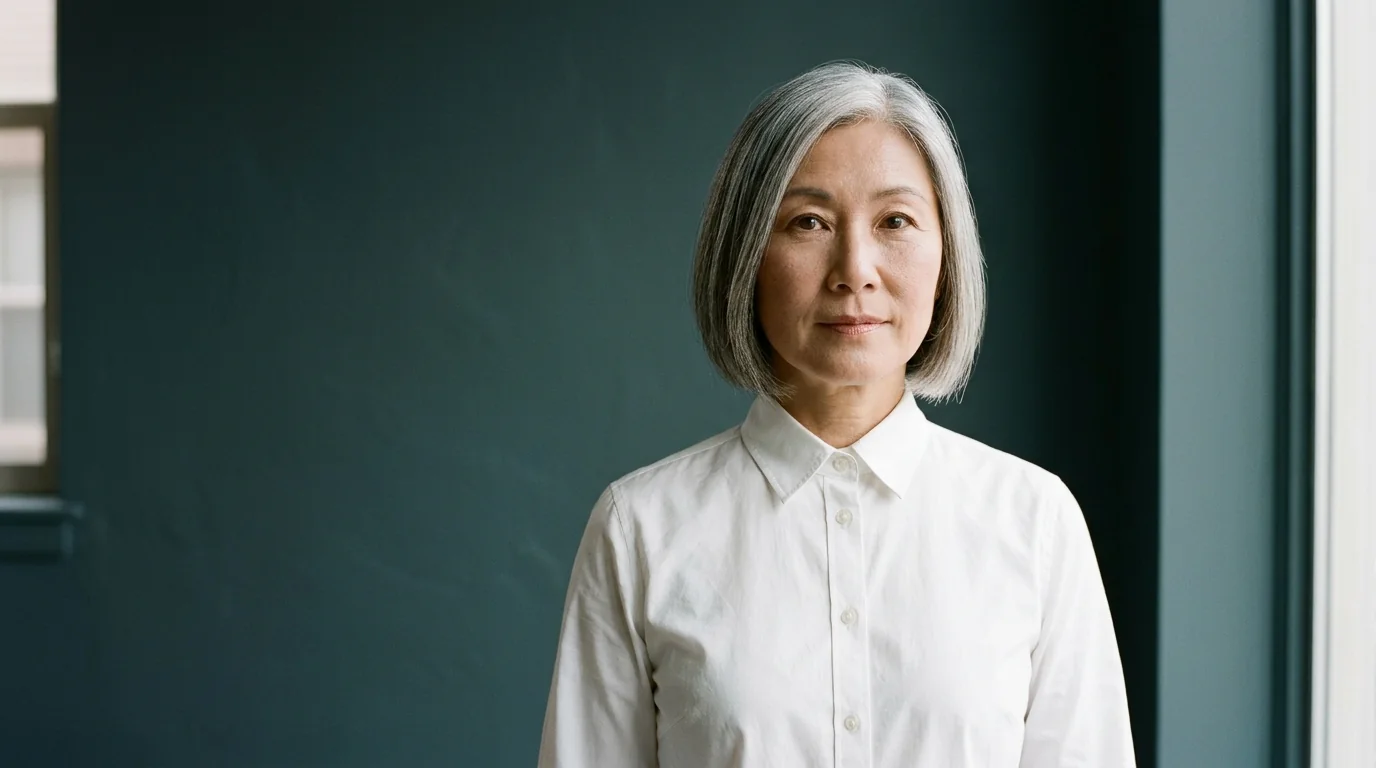
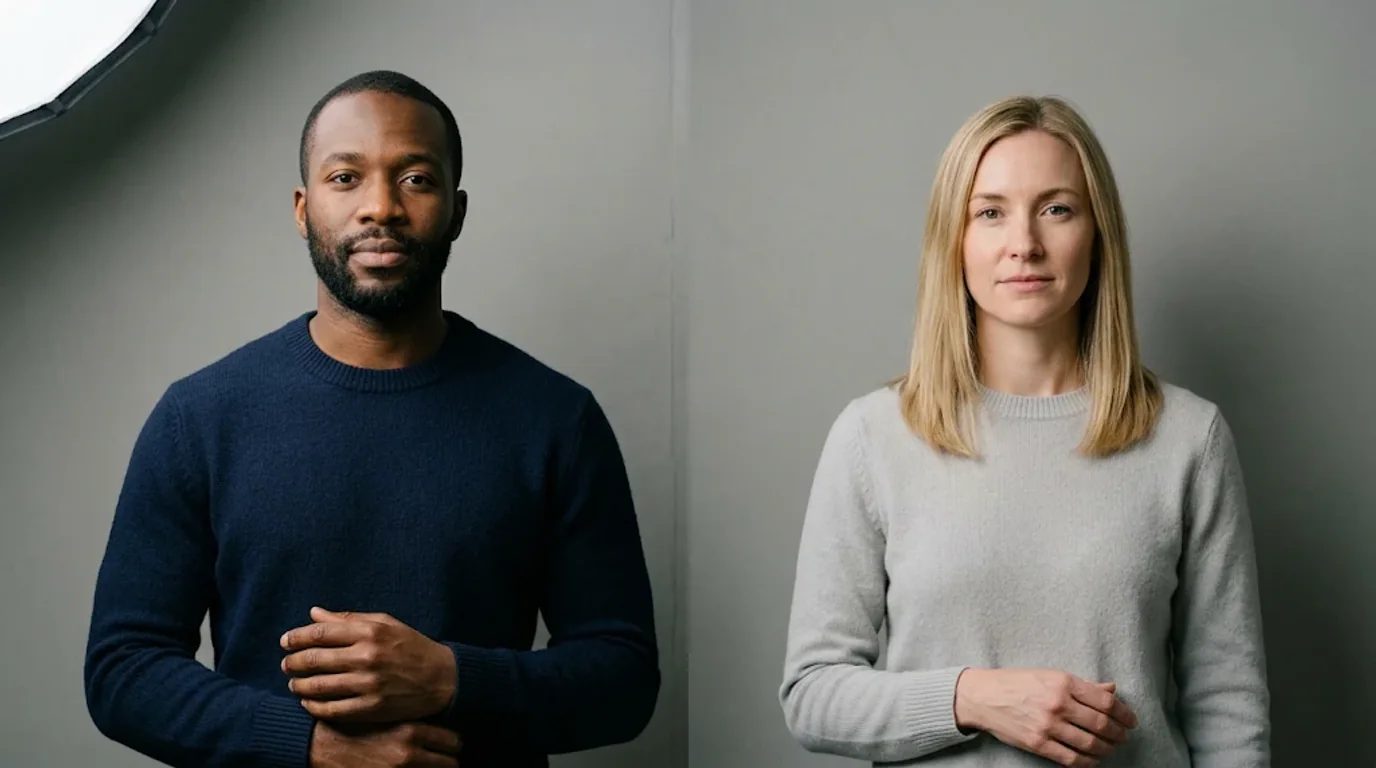
The first question is not what colour suits you, it is what colour separates you from what is behind you. A pale top against a white studio wall loses its edge; a navy top against a dark grey wall does the same.
The rule of thumb: aim for a clear step in tone, roughly two stops, between the garment and the background. Pale background, darker top. Dark background, lighter top. Mid-grey background, either, as long as the step is visible.
If you do not know the background in advance, a mid-tone is the safe answer, because it has room to separate from both a light and a dark wall.
#Match against your skin tone
The second relationship is with your skin, and it is not about which colours "flatter" you in the cosmetic sense. It is about separation.
If your top is very close in tone to your face, the neck disappears and the head appears to float. A pale person in a pale beige top against a pale wall can lose the jawline entirely. A dark-skinned person in a dark brown top can lose the neck in the same way.
The fix is a step in either direction: lighter or darker than the skin, not equal to it. This is why mid-tones work so widely. They are rarely equal to a face.
#The white shirt problem
A white shirt is the default formal choice and the single most common headshot mistake. Three things go wrong at once.
First, it is usually the brightest thing in the frame, so auto-exposure protects it and lets the face fall a little dark. Second, against a white or light grey background it merges into the wall, and the shoulders vanish. Third, at the collar it produces a hard bright edge right under the jaw, which draws the eye to the brightest shape rather than to the eyes.
If you want the crisp look, three alternatives work better than pure white:
- Off-white or cream, which keeps the formality and drops the brightness.
- Pale blue, which is the traditional shirt colour in formal portraits for exactly this reason.
- White under a jacket, so that only a narrow V of white is visible and the large bright area is broken up.
#The all-black problem
Black fails in the opposite direction. It absorbs light, so detail in the fabric disappears and the shoulders become one dark shape. The collar line disappears, which is why people in black headshots often look like they are wearing a crew neck even when they are not.
It also increases apparent contrast at the neck: the face looks brighter and the jaw looks harder, because there is nothing between the skin and the void.
If you want the dark, minimal look, charcoal and navy read as near-black on camera while keeping enough reflected light to show the fabric. A black top against a mid-grey background can work well, because the separation comes from the wall rather than the garment.
#Colours that work almost everywhere
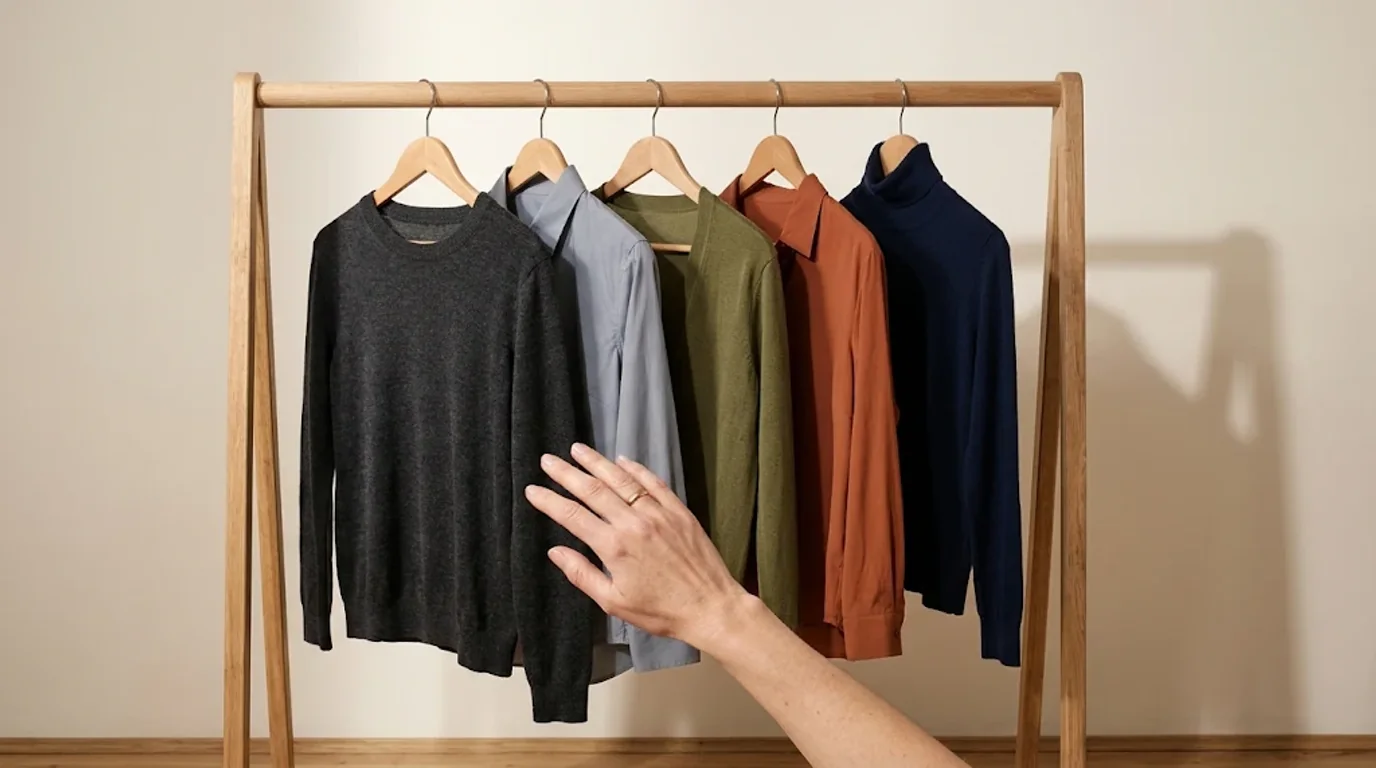
The reliable set is mid-tone, slightly desaturated and neither very warm nor very cool:
- Navy and slate blue
- Charcoal and mid-grey
- Olive and forest green
- Teal and petrol blue
- Rust, terracotta and soft burgundy
- Mustard and warm ochre
Each of these holds detail in shadow, does not clip in light, and separates from both a pale and a dark background. They also age well, which matters if the photo will be used for three years.
Colours that need care: pure white, pure black, bright red (which clips on the red channel and makes skin look flushed beside it), neon anything, and very pale pastels against pale walls.
#Should the colour match your industry?
Loosely, yes. Finance and law lean navy and grey. Creative fields can carry rust, olive and burgundy. Healthcare and education usually read best in soft, quiet colours. Technology is the least colour-coded field and the most tolerant of a plain dark knit.
But this is a weak signal compared with contrast and texture. A well-separated olive shirt reads as more professional than a badly exposed navy suit.
#Necklines and Collars
#Why the neckline matters more than the shirt
A headshot crop ends somewhere around the upper chest. What sits at that line determines whether the frame looks finished or accidental.
A collar does three things at once: it creates two diagonal lines that point toward the face, it adds a clean horizontal break below the jaw, and it signals formality without needing a jacket. This is why a plain collared shirt so often beats a more expensive t-shirt.
A crew neck does the opposite: it draws a curve across the base of the neck and can make the neck look shorter. It is not wrong - it is the correct choice for a warm, approachable, non-corporate photo - but it is a decision, not a neutral default.
#Collared shirts
The most versatile option. Open collar without a tie reads as modern professional in almost every field. A buttoned collar without a tie can look slightly severe; a spread collar with a jacket looks formal without effort.
Two practical points. First, make sure the collar sits flat and the points are not curling, because a curled collar is one of the few clothing faults that is clearly visible at headshot size. Second, if the shirt is new, wash and iron it before the shoot: the fold crease from the packet runs exactly across the collar.
#Knitwear and t-shirts
A fine-gauge knit is the best-kept secret in headshot wardrobes. It holds a clean shoulder line, it is matte by nature, and it photographs as a calm block of colour. A crew neck in navy, charcoal or olive is close to ideal for a modern professional photo.
T-shirts work when the field is genuinely casual and the fabric is heavy enough not to cling or show the shape of what is underneath. A thin t-shirt in a bright colour, photographed in strong light, is the most common way a casual headshot goes wrong.
#Turtlenecks
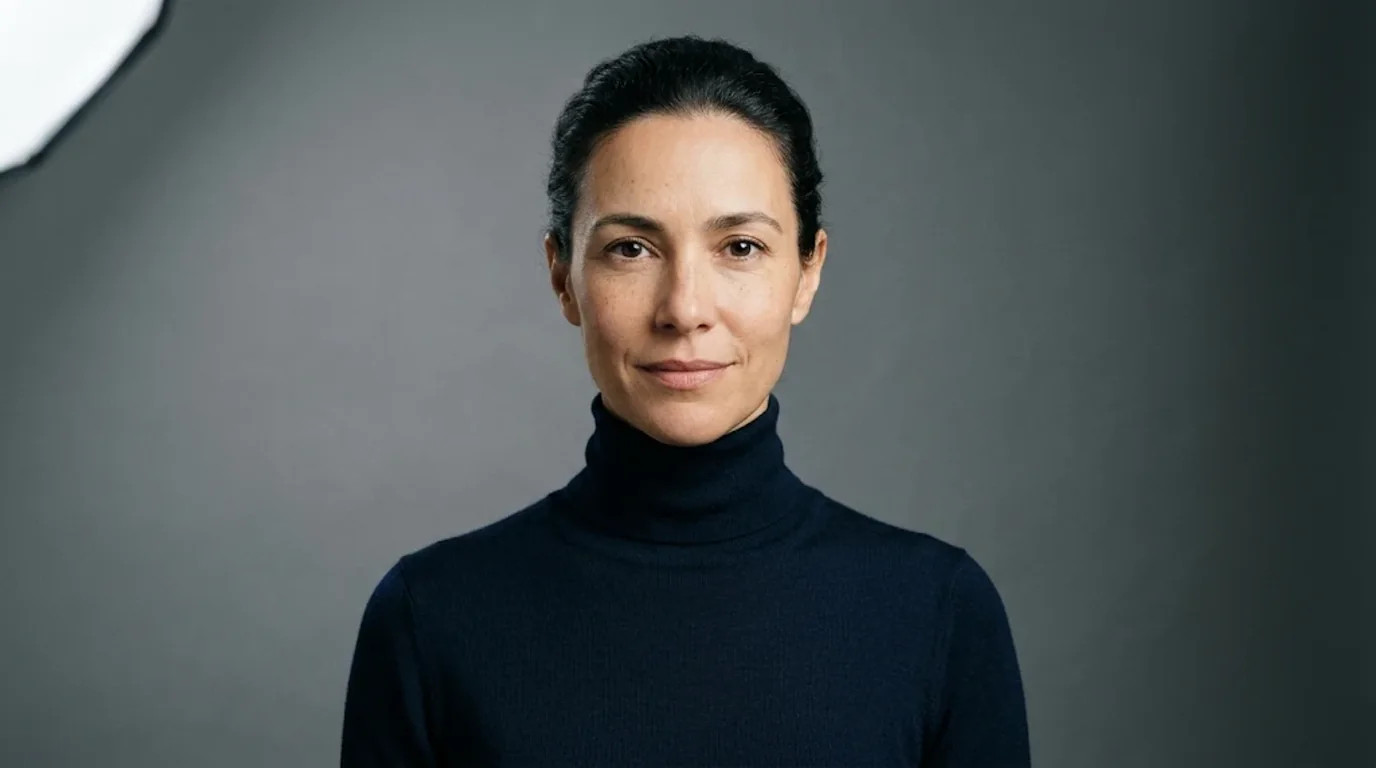
A turtleneck is the most flattering neckline for most people, for a simple geometric reason: it covers the neck completely, so the jawline becomes the bottom edge of the face and there is no neck to foreshorten.
It also removes the collar problem entirely. If you want one garment that works in a corporate photo, a creative photo and an AI-generated set, a fine black, charcoal or navy turtleneck is the strongest single answer. The trade-off is warmth and a slightly severe look on camera; a softer knit and a lighter colour soften it.
#Open collars and blazers
The combination that reads as senior without a tie: a jacket, an open collar, no tie. It works because the open collar adds a vertical line where the tie would be, and the jacket supplies the shoulder structure.
If the jacket is dark and the shirt is pale, you get the best of both: a small area of brightness near the face and a large area of calm around it. This is why the look survives in photographs across decades.
#Necklines to avoid
- Very wide boat necks, which cut a horizontal line across the shoulders and can look like the frame is slicing you.
- Deep V necks in a formal context, which pull attention down and out of the crop.
- Strapless or one-shoulder garments, which leave the shoulders bare and make the crop look like an evening photo rather than a professional one.
- Hoodies with the hood up, unless the field is genuinely that casual, because the hood adds a second silhouette around the head.
#Patterns and Logos
#Why fine patterns shimmer
This is the one piece of clothing advice that is genuinely technical, and it is the same problem that ruins striped shirts on video calls.
A camera samples the scene on a grid of pixels. A fine pattern - a pinstripe, a small check, a tight herringbone, a houndstooth, a fine rib knit - has a repeat that is close to the size of that grid. When two regular patterns of similar scale overlap, the result is a third pattern that does not exist in reality: bands, ripples or a crawling texture. That is moire.
At headshot distance the effect is mild but real. In a photo that will be displayed at 200 pixels wide, it becomes a general fuzziness over the chest and shoulders, which reads as a poor photograph rather than as a shirt.
#Which patterns survive
The test is simple: step back from a mirror until your head and shoulders fill an imaginary frame, and look at the garment from that distance. If you can still see the pattern as a pattern, it will photograph. If it collapses into texture, it will collapse on camera too.
In practice:
- Wide stripes (more than about two centimetres) survive.
- Large-scale prints and bold blocks survive.
- Pinstripes, small checks, houndstooth and tight herringbone do not.
- Fine rib knits produce a mild, mostly harmless texture; very fine ones can shimmer.
#Logos and slogans
Visible branding is a decision about who the photo is for. A small, discreet logo is usually invisible at headshot size and not worth worrying about. A large logo, a slogan or a sports team crest turns the photograph into a statement, and it dates the image to the year the brand was current.
For a professional photo, the safest rule is no legible text on the garment at all. This is especially true for AI-generated headshots, where text is a known weak point and a logo can come out distorted or half-invented.
#When a pattern helps
There is one case where a pattern is the better choice: a very dark background and a very dark garment, where a solid colour becomes a single flat mass. A large, simple pattern in a slightly lighter tone can restore some structure. Even then, a mid-tone solid usually solves the same problem more cleanly.
#Fabric, Fit and Preparation
#Matte beats shiny
Shiny fabric - satin, silk blends, some polyester, anything with a sheen - reflects the light source directly. On a face-and-shoulders crop, that reflection appears as a bright patch on the shoulder or chest that has nothing to do with the shape of the body. It looks like a mistake, because it is one.
Matte fabric scatters light instead of reflecting it, so it records the colour of the garment rather than the shape of the lamp. Cotton, wool, linen blends, fine-gauge knits and most matte synthetics all work.
#Wrinkles read as carelessness
A crease in the fabric under the collar, a fold across the chest, a collar that will not sit flat: at headshot size these are more visible than they are in a mirror, because the crop removes everything that would have distracted from them.
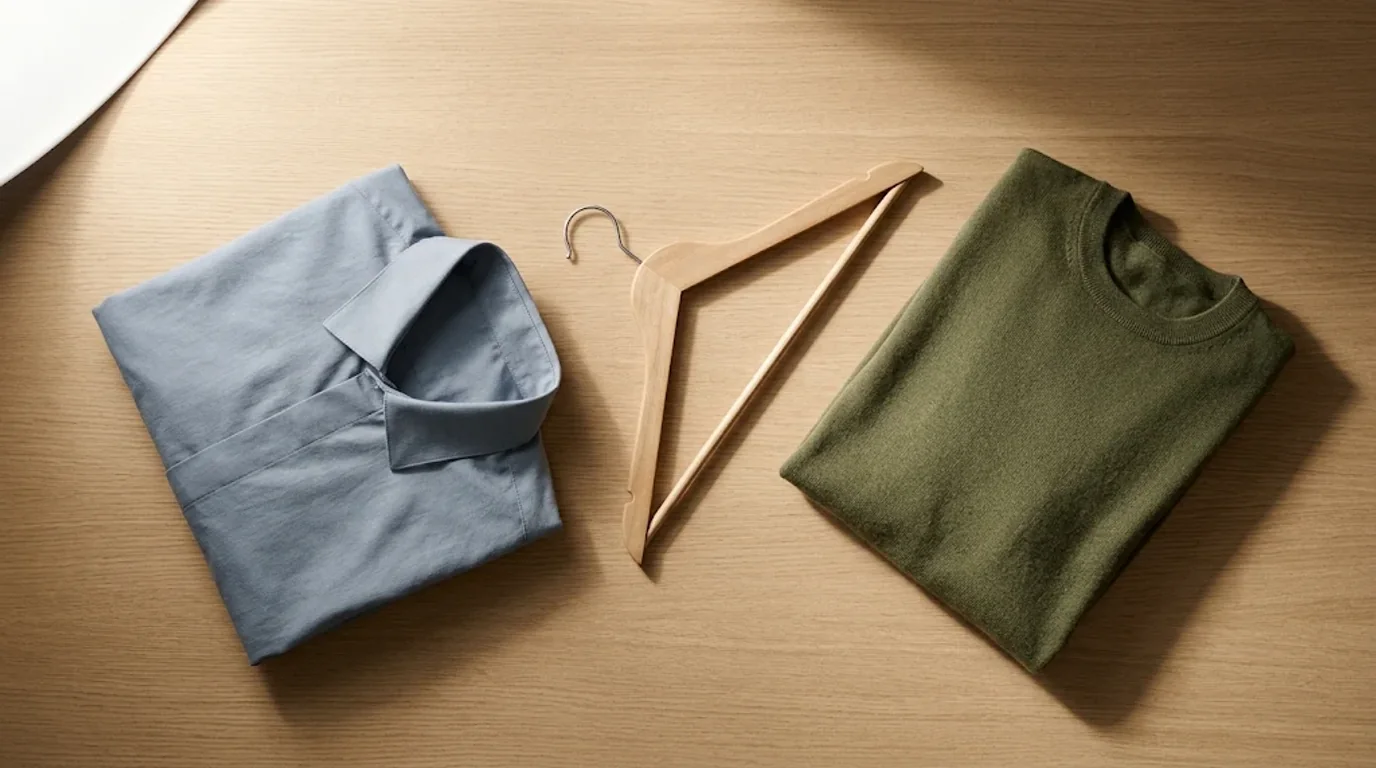
Ironing is enough. Steaming is better for knits. If you are travelling to a shoot, carry the shirt on a hanger rather than folded in a bag, or plan to arrive early enough to steam it.
#Fit at the shoulder
The shoulder is the only part of the garment that the camera sees as structure. A shoulder seam that sits past the edge of your shoulder creates a sloping line that makes the whole frame look soft. A seam that sits inside the shoulder creates a tight, pinched look.
Everything else can be loose. A shirt that is slightly large through the body is invisible in a headshot crop; a shoulder that is one size wrong is not.
#Sleeves and the frame edge
Find out where the frame will cut before you choose the outfit. If the crop includes part of the upper arm, a sleeve that ends mid-bicep will produce a horizontal line at an awkward height. If the crop ends above the arm, sleeves do not matter at all.
For a tight head-and-shoulders crop, short sleeves are usually safer than three-quarter sleeves, because there is no hem in the frame to compete with the jaw.
#The spare shirt
The single most useful preparation step: bring a second top in a different tone. Light changes, backgrounds change, and the shirt that looked right in the mirror can be the wrong value under a softbox. A spare takes one minute to change and saves the session.
#Jewellery, Glasses and Accessories
#Small and matte
The general rule for anything reflective: it will catch the key light and produce a highlight brighter than the face. A highlight is the brightest point in the frame by definition, so the eye goes there first.
Small studs, a thin chain, a plain band and a matte watch are safe. Large polished hoops, statement necklaces, chunky metal bracelets and mirrored sunglasses are not.
#Earrings and the crop
Earrings are the accessory most often ruined by the crop. A drop earring that hangs below the jaw can be cut by the frame edge, and a long earring that swings can sit at a different angle in every frame of a set.
If you wear earrings daily, choose a size that stays inside the head silhouette in the preview. Small studs and short drops almost always survive.
#Glasses
Glasses are not a clothing problem but they behave like one, because the lens is a reflective surface in the middle of the face.
Three fixes, in order of effectiveness:
- Move the light. A key light at 45 degrees to the side reflects away from the lens; a light straight in front reflects into it.
- Tilt slightly. A chin down by a few degrees or a lens tilted a degree or two moves the reflection off the pupil.
- Use the coating. Anti-reflective coating does not remove the problem but it reduces the intensity a lot.
Do not remove your glasses for a photo if you never remove them in life. People who know you will notice the absence before they notice anything else about the picture.
#Watches, ties and other decisions
A watch is usually out of frame in a tight crop and irrelevant in a wide one. A tie is a statement about formality, not about photography: it works if the field expects it and looks like a costume if it does not.
Belts, bags and shoes are almost never in a headshot. Do not spend decision energy on them.
#Industry, Role and Dress Codes
#The rule behind the rules
Every dress code in a headshot is answering one question: does this outfit make the viewer believe the person belongs in this role? That is why the same navy jacket that looks authoritative in a law firm looks like a costume at a design studio.
The practical approach is to look at the photos your industry already publishes - team pages, conference speaker lists, company press pages - and find the middle of the range. Wearing the middle is safer than wearing the extreme in either direction.
#Corporate, finance, law and consulting
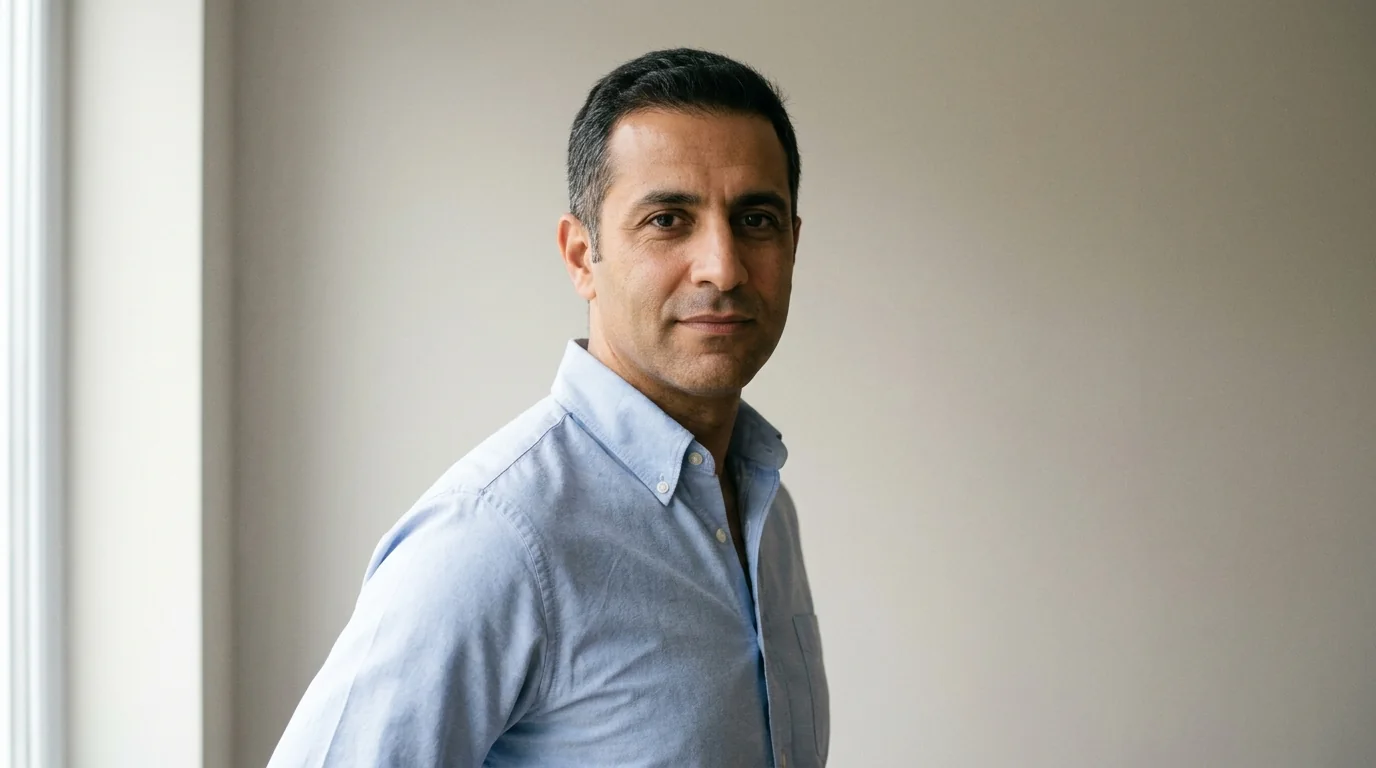
Dark jacket, pale shirt, tie optional. Navy and charcoal are the two reliable colours; grey is a third. This is the one field where formality still carries information, and where a t-shirt genuinely costs you something.
Women in these fields have a wider range than the old rules suggest: a structured blazer over a plain top reads as equally formal, and a dark sheath dress with a clean neckline works in a head-and-shoulders crop.
#Technology, design and creative work
The signal is competence without costume. A plain dark knit, a well-cut shirt without a jacket, or a turtleneck all read correctly. Colour is more welcome here than anywhere else.
The failure mode in this field is over-dressing: a full suit in a startup team page reads as if you are interviewing somewhere else.
#Healthcare, academia and research
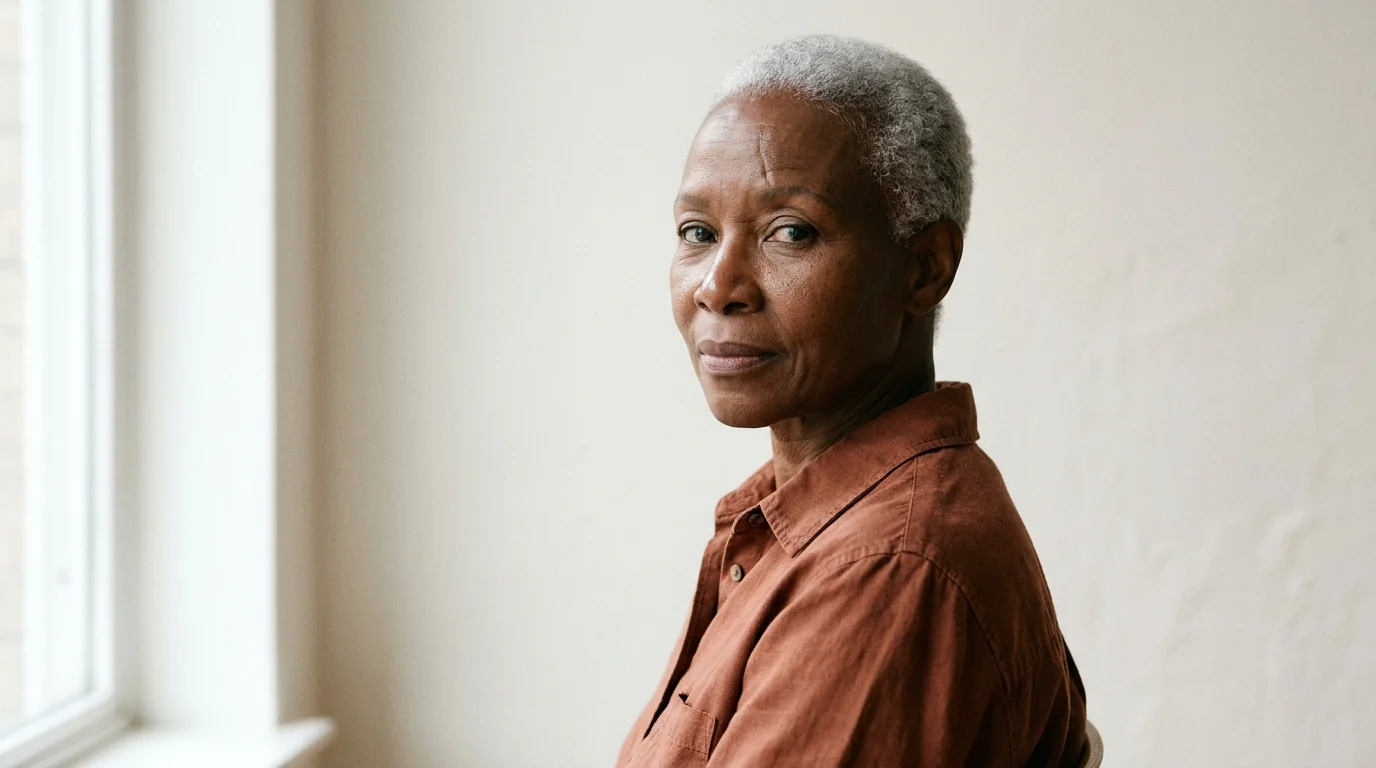
Quiet, clean and unlikely to date. A solid mid-tone shirt or blouse, a collar optional, a cardigan rather than a jacket if you want warmth. White coats belong in a clinical photo if that is the role; in a general academic profile they can read as a costume unless the context establishes it.
#Trades, uniformed and public service
If you have a uniform, wear it - clean, complete and correct. The uniform is the credential, and a suit in place of it removes the most informative thing about the photo. If you do not have a uniform, a plain work shirt in a solid colour does the same job.
#Students and first jobs
Simple collared shirt in a mid-tone. The aim is to look like a slightly more polished version of yourself rather than like someone who borrowed a parent's jacket. A shirt that fits at the shoulder is worth more than a jacket that does not.
#Uniforms, religious dress and cultural dress
If a garment is part of who you are rather than part of a costume, wear it. A headscarf, a turban, a kippah, a clerical collar, a bindi, a hijab: these are not accessories to be minimised for the camera, and a photographer who asks you to remove them is solving the wrong problem.
The technical considerations are the same as for any other garment: a matte fabric in a tone that separates from the background and from the skin. A patterned headscarf at fine scale can shimmer; a solid colour photographs more predictably. If the garment frames the face - a turban or a headscarf close to the cheek - check in the preview that the face still has a clear edge against it, and adjust the background tone rather than the garment.
Clergy and academic dress follow the same logic as uniforms: the garment carries the role, so wear it correctly and let the light do the rest.
#What Not to Wear
The seven failures that show up most often, in rough order of how much damage they do:
- Pure white against a pale wall. The shoulders disappear and the face goes dark. Use off-white or pale blue.
- All black in a dark frame. The collar and shoulders vanish into one mass. Use charcoal or navy, or lighten the background.
- Fine stripes and small checks. They shimmer at headshot distance and read as a bad camera. Use a solid or a wide pattern.
- Shiny fabric. It puts a bright patch on the shoulder where the lamp is. Use matte cotton, wool or fine knit.
- A garment that matches your skin tone. The neck disappears and the head floats. Step lighter or darker.
- A visible logo or slogan. It dates the photo and turns it into a statement. Keep text out of the frame.
- A shoulder that does not fit. It is the only structural line the crop shows. Get this one right even if nothing else fits perfectly.
Two more that are specific to generated portraits: large prints and complex accessories, because an AI model has to invent consistent detail across frames and will drift.
#How This Changes for an AI Headshot
#Why the model needs simpler clothing
A photographer records what is in front of the lens once. A generative model has to produce many frames that look like the same session, and every variable in the input is something it has to keep stable across all of them.
Clothing with fewer variables produces a more consistent set. A solid mid-tone top with a simple neckline gives the model one colour, one texture and one shape to hold. A checked shirt with a lanyard, a scarf and a logo gives it five things that can change between frames.
This is not a limitation you have to work around so much as an instruction: dress for an AI headshot as you would for a passport photo, not for a fashion shoot.
#Keep the neckline consistent
The neckline is where generated sets most often fall apart, because it sits at the boundary between face and garment and small errors are visible exactly there. If you use a collar in one input photo, use a collar in all of them. Do not mix a crew neck and an open collar in the same submission.
Two or three tops in the same neckline family - all collared, or all crew - is the most reliable input.
#Clothing that dates quickly
A headshot is usually used for two to four years. Trend-heavy pieces - an oversized blazer in a colour that is fashionable this season, a distinctive collar shape, a print that reads as 2026 - will make the photo look old before the face does.
Plain mid-tones, a fine knit and a classic collar are the pieces that survive a three-year cycle.
#What the model gets wrong
Three known failure modes, all reduced by simpler clothing:
- Text and logos are often distorted or invented. Keep them out of frame.
- Fine patterns can shift between frames or dissolve into noise.
- Accessories at the neck - lanyards, thin chains, scarf knots - can merge with the collar or disappear.
If you already have a set and the clothing looks inconsistent, the cheapest fix is usually to regenerate from photos with plainer tops rather than to retouch the output.
#A Five-Minute Wardrobe Check
Before you commit to an outfit, run this list:
- Hold the garment up to the background you will use. Can you see a clear edge between them?
- Hold it under your chin. Is it clearly lighter or darker than your skin, not the same?
- Step back two metres and look at the pattern. Can you still see the pattern, or has it become texture?
- Check the shine. Turn the garment toward a lamp. Is there a hard bright patch, or a soft glow?
- Check the shoulder seam. Does it sit on the edge of your shoulder, not past it and not inside it?
- Check the collar. Does it sit flat, or does one point curl?
- Check the neckline in a phone preview. Zoom to a head-and-shoulders crop and look for text, logos and jewellery that will be cut.
- Bring a second top in a different tone. This is the step people skip and regret.
If the outfit passes all eight, it will photograph well in almost any light, which is the point: you are choosing for the camera, not for the mirror.
#Frequently Asked Questions
#What should I wear for a headshot?
A solid colour in a mid-tone that contrasts with your background and does not match your skin, in a matte fabric that fits closely at the shoulder. Navy, charcoal, olive, teal, rust and soft burgundy work for almost everyone. Add a collar if you want the frame to read as formal. Avoid pure white, all black, fine stripes and shiny fabric, because the camera handles each of those badly.
#What colours look best in a headshot?
Mid-tone colours with some saturation: navy, charcoal, olive, teal, forest green, rust, mustard and soft burgundy. The rule is not a specific colour but a relationship: the top should be clearly lighter or darker than the background and clearly different from your skin. A mid-tone blue against a grey wall and a warm beige against a dark wall both work. Pure white and pure black sit at the extremes, where cameras lose detail fastest.
#Should I wear a white shirt in a headshot?
Only with care. A white shirt is the brightest thing in the frame, so the camera exposes for it and your face falls into shadow, and against a white or pale grey background the shirt loses its edge and merges into the wall. If you want the crisp look, choose off-white, pale blue or a light grey instead, or wear a jacket over the white shirt so that only a small area of white is visible.
#Is black okay for a headshot?
Black is fine against a lighter background, but it loses all detail in shadow and turns into a flat silhouette, which makes shoulders and collar disappear. It also absorbs light, so the face next to it looks brighter and the neck can look cut off. If you want dark, use charcoal or navy, which read as near-black on camera while keeping some texture in the fabric.
#Should I wear a suit for a headshot?
Wear a suit if you wear one in the job you are applying for, or if the photo will sit next to people who do. In finance, law and consulting the jacket still signals seniority. In technology, design and most startups a plain knit or a shirt without a jacket looks more accurate and no less professional. The worst outcome is not the wrong jacket, it is an outfit that obviously belongs to someone else.
#What patterns should I avoid in a headshot?
Fine stripes, small checks, tight herringbone, houndstooth and some knitted textures. At headshot distance these patterns sit close to the sensor's resolution, and the result is moire: a shimmering, crawling texture that looks like a compression error. The effect is strongest on high-contrast patterns and on video, but it appears in stills too. Large, simple patterns survive; a pinstripe does not.
#Can I wear glasses in a professional headshot?
Yes, and you should if you wear them every day, because a headshot is supposed to look like the person who shows up to work. The problem is reflection, not the glasses. Ask the photographer to angle the key light further to the side, tilt your chin down slightly, or tilt the glasses a degree or two. Anti-reflective coating helps and a lens close to the camera axis reduces the visible reflection.
#What jewellery should I wear in a headshot?
Small and matte. A plain chain, small studs or a thin watch are safe. Large polished pieces catch the key light and create a bright highlight that pulls the eye away from your face, and long earrings that swing out of the crop look like an accident. If a piece is meaningful, wear it, but check the preview for a hot spot before you commit to the frame.
#What should I wear for a LinkedIn photo?
The same thing you would wear to the job you want next, not the job you have now. LinkedIn crops to a small circle, so keep the outfit simple: a solid mid-tone top, a collar if your field is formal, and nothing that reads as a costume. Because the image is displayed at 100 to 200 pixels wide, detail is wasted, and a bold block of colour reads better than a subtle pattern.
#Do I need a blazer for a corporate headshot?
A blazer helps in three ways: it creates a clean vertical line at the shoulder, it hides creases in the shirt beneath it, and it gives the frame a formal edge that a t-shirt cannot. If you do not own one, a structured shirt or a fine-gauge knit in a dark colour does most of the same work. The jacket only needs to fit at the shoulder; the rest can be tailored later.
#What should I wear for an AI headshot?
Simpler than you would wear for a photographer. Use two or three plain, matte, mid-tone tops with no logos, no fine patterns and no large prints, and keep the neckline consistent across the set. The model has to keep the clothing coherent between generated frames, and every extra detail, pattern or accessory is something it can drift on. Solid colours at the neckline are what make a generated set look like one session.
#Should I wear the same outfit in every headshot?
Yes for a single profile, because people compare photos across your site, your profile and your email signature, and a consistent outfit makes the set look intentional. Different outfits are useful only when the photos serve different purposes, such as a formal corporate portrait and a warmer personal one. Keep the colour family the same and change one element, not the whole look.
#The Bottom Line
Headshot clothing is not really a question of taste. It is a question of contrast, texture and detail, and all three can be judged in a mirror in five minutes.
Choose a colour that sits clearly away from your background and clearly away from your skin. Choose a matte fabric that holds detail in shadow and does not reflect the lamp. Choose a neckline that ends the frame deliberately rather than accidentally. Keep the pattern large or leave it out. Check that the shoulder fits, because the shoulder is the only structure the crop shows.
Then stop. The garment is not the photograph. The best headshot outfit is the one that makes a viewer forget there is an outfit and look at the face, and every rule in this article exists for that single purpose.
If you are building the photo itself rather than choosing the clothes, our headshot generator works from photos you upload, and how to take photos for an AI headshot generator covers what to send it. If you want the general method for a phone portrait instead, how to take good pictures of yourself is the place to start.
#Methodology and Sources
This guide separates three kinds of statement:
- Published: a peer-reviewed finding or a named photographic source.
- Practical: a technique from portrait and studio practice, labelled where it is judgement rather than measurement.
- Opinion: a recommendation from this team, such as the preference for mid-tones over pure white.
Sources checked on 9 November 2026:
- Willis J, Todorov A. First Impressions: Making Up Your Mind After a 100-Ms Exposure to a Face. Psychological Science. 2006;17(7):592-598. The finding that trait judgements made from a 100-millisecond exposure correlate strongly with judgements made without a time limit.
- Adam H, Galinsky AD. Enclothed Cognition. Journal of Experimental Social Psychology. 2012;48(4):918-925. The finding that what a garment symbolises, and whether it is worn, changes the wearer's own performance - the reason clothing is treated here as meaningful rather than decorative.
- Adobe, Portrait photography tips and ideas from experts. Guidance on key and fill light, and on keeping the subject the brightest and most separated element in a portrait.
- Digital Photography School, A Beginner's Guide to Taking Portraits of Elderly Clients: Part 2 - Lighting and Posing. Practical notes on soft light, key light height and controlling reflections in glasses.
The moire and clipping observations are practical, not measured: they describe how a pixel grid and a limited dynamic range behave with fine patterns and extreme brightness. The colour guidance describes tonal separation, not attractiveness. The industry notes are conventions observed in published team and speaker pages, not rules with a source.
#Explore Other Nothron Tools
Nothron is not just a headshot generator - it is a complete AI photo studio:
#AI Tools
- Nothron Neural Engine - Sharpen, upscale, and clean up a low-resolution photo
- Nothron Natural Glow - Improve skin tone without making the face look artificial
- Nothron Legacy Touch - Restore an older photo before you rebuild your set
#Photo Editing Tools
- Photo Editor - Adjust brightness, contrast, and background details
- Free Online Image Cropper - Crop to the ratio each app expects
- Free Online Circle Cropper - Preview how a photo reads as a circular avatar
#Dashboard Tools
- Nothron Neural Headshot Generator - Create dating and professional portraits with AI
- Dashboard Neural Engine - Advanced AI photo enhancement
- Dashboard Natural Glow - AI-powered skin tone enhancement
- Dashboard Legacy Touch - AI old photo restoration
#Other Blog Posts
- How to Look Good on Video Calls - Camera height, light and framing for the other half of your working image
- How to Take Photos for an AI Headshot Generator - The 10-15 photo checklist
- How to Take Good Pictures of Yourself in 2026 - The general phone-only method
- Professional Headshot Guide by Profession - What each industry expects
- Should You Smile in Your Headshot? - What the research says
- LinkedIn AI Headshot Authenticity - How to keep a portrait recognisably you
#Author Biography
Nothron Team is a group of AI and photo editing experts dedicated to building the best AI headshot generator and photo editing platform. With years of experience in AI technology, computer vision, and professional photography, we built Nothron as a platform where anyone can create studio-quality portraits. Our mission is to make professional photo editing accessible to everyone through advanced AI technology.
Nothron Team
The Nothron team turns experience in AI, computer vision and professional photography into a photo studio that anyone can use.